
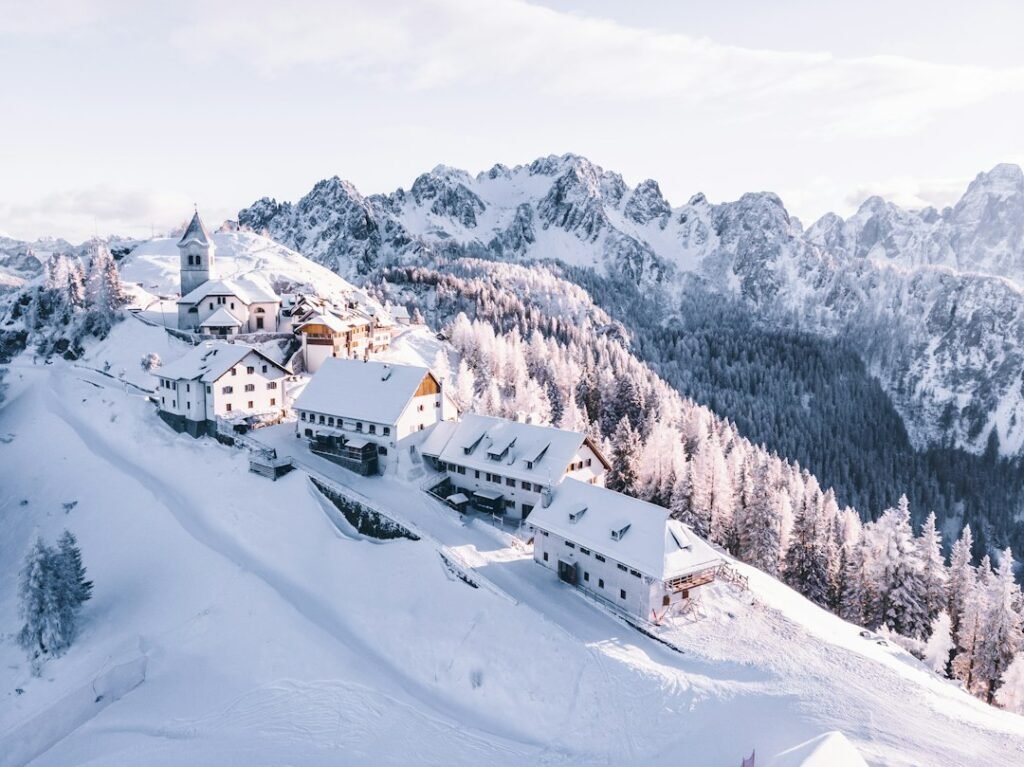
Where should you go skiing in Europe?
For big, interconnected ski areas, start with France. Tignes and Val Thorens suit keen skiers who want lots of terrain, while Avoriaz is particularly convenient for families. Austria is a great choice for traditional mountain towns and lively après-ski; try St Anton or Mayrhofen. For a more relaxed village atmosphere, look towards Italy or Switzerland. And if keeping the budget under control matters most, compare Bulgaria and Andorra.
There’s no one-size-fits-all resort. Below, we’ll compare the main destinations, who they suit best, and the trade-offs worth knowing before you book. You can also explore them on the SlopeFinder map as you go.
Start with the holiday you actually want
There is no single best place to ski in Europe. What works for a family taking its first lessons is unlikely to be the same resort an experienced group would choose for steep terrain and lively evenings. The easiest way to narrow down the choices is to decide on three things before looking at hotels: who is skiing, what kind of mountain you want and how far you’re willing to travel. A few hundred kilometres of pistes sound impressive, but they are wasted money if you’ll spend the whole week on the same gentle lifts. Equally, a charming little resort can feel restrictive if your group loves covering ground. The trick is choosing a mountain you’ll actually enjoy using.
France for big ski areas and convenient mountain bases
France deserves its popularity with British skiers. Purpose-built high-altitude stations often put the snow and lifts conveniently close to apartments, while traditional villages offer a different atmosphere. If you want a car-free, largely slopeside base, Avoriaz is worth a look. Tignes offers extensive high-mountain skiing and plenty of choice for stronger skiers. The important distinction is between a resort’s headline linked ski area and the part you’ll realistically use. Check the slopes around your accommodation, especially if you have beginners in tow. An apartment next to an easy run can make the entire week smoother than a more luxurious property requiring a bus journey each morning.
Austria for mountain towns and après-ski
Austria has a knack for making the whole holiday feel like a trip to the mountains rather than just a week on pistes. Timber-clad villages, mountain restaurants and a strong après-ski tradition are part of the appeal. St Anton is a compelling option for confident skiers who want challenging terrain and lively evenings. Mayrhofen has more of a bustling town feel, though the journey from hotel to ski lift deserves attention. For a high-mountain option, consider Sölden. There’s more to an Austrian skiing holiday than the size of the ski area, so work out which village suits you before getting drawn into package prices. Read our full Austrian ski holidays guide for the differences.
Italy for food, scenery and a less frantic pace
Italy has an appeal that goes well beyond spectacular Dolomite scenery. For many people, the relaxed mountain lunches, attractive villages and excellent food make the trip memorable. Resorts vary enormously, though, and some ski areas require buses or lifts between their sectors. If your party includes people who are happy skiing half a day and enjoying the afternoon, that might be an advantage rather than a drawback. But don’t book purely on photographs of beautiful peaks. Check which runs connect directly to your accommodation, whether the terrain matches your abilities and how long you’ll spend travelling from the airport. A traditional village a little further from the lifts can still be a wonderful base if everyone understands the logistics.
Switzerland for iconic mountains and premium stays
Switzerland is easy to fall for. The scenery is extraordinary, many mountain villages have real character, and the transport infrastructure can make getting around surprisingly pleasant. The obvious catch is the budget. Eating out, accommodation and mountain services may cost considerably more than equivalent options elsewhere, especially when the pound is weak against the Swiss franc. That doesn’t mean you should rule Switzerland out, but it’s one destination where comparing the complete cost is particularly important. Think about the type of experience you want too. Some places attract visitors for their village ambience and mountain views just as much as the skiing itself. You may decide the atmosphere justifies the premium, or you may prefer more skiing for your money elsewhere.
Andorra for flexible resort choices
Andorra is a great example of why a small country doesn’t mean a simple choice. Soldeu puts you in reach of Grandvalira, while Pas de la Casa has a noticeably livelier feel. Arinsal is often worth considering for a sociable ski trip with lessons in mind. The areas aren’t all the same mountain, so double-check the lift pass and the resort base on the package you’re looking at. Andorra also needs a little more thought on transfers, as most visitors arrive through airports in neighbouring countries and travel onward by road. Our Andorra guide explains the main choices.
Bulgaria when overall value matters
For skiers watching the total holiday bill, Bulgaria deserves a proper look. Bansko has a lively town and a well-known ski area, but you’ll need to consider the gondola journey from town to the mountain, particularly in busy periods. Borovets offers a different, more mountainside resort experience, while Pamporovo can appeal to travellers who favour more forgiving slopes. Bulgaria is not automatically cheaper once flights, passes, lessons and transfers are counted, but it gives you a useful alternative to the bigger Alpine destinations. We compare the three in our Bulgaria ski holiday guide.
Slovenia and smaller mountain destinations
Don’t overlook the smaller resorts when putting a shortlist together. Kranjska Gora in Slovenia offers a compact mountain-town atmosphere that’s quite unlike a huge purpose-built station. That may be ideal for a couple or a family happy to ski at a gentle pace, though stronger skiers need to be realistic about the amount of terrain. Smaller resorts can be less overwhelming, easier to navigate and more personal, but some have fewer lifts, limited childcare or weather-sensitive lower slopes. An attractive little resort isn’t necessarily the best place for a week of hard skiing. The right choice comes down to who is travelling and what they expect to do each day.
Beyond the Alps: Pyrenees, Balkans and Caucasus
Some of the most interesting ski trips take you outside the obvious Alpine destinations. The Pyrenees offer a different mountain landscape, while the Balkans and Caucasus include resorts that may appeal to people looking for a change of scene. Bakuriani in Georgia, for example, is worth investigating for a less conventional family mountain holiday. These destinations can involve different airport routes, transfer arrangements and infrastructure, so I’d be especially careful about working out the full journey before paying. You’ll also want current official information about lifts, lessons and local transport. Treat an unfamiliar resort as an opportunity for discovery, not an excuse to skip the practical checks.
Where should beginners go?
If you are learning, look for a gentle, convenient learning area, good instruction and a place where getting onto the mountain doesn’t feel like a daily expedition. You do not need the largest linked ski area in Europe. A confident friend may insist you’ll be on red runs by the end of the week, but I’d plan around the skier you are now rather than the skier you hope to become. A friendly nursery area ten minutes from your accommodation is worth far more than a famous black run you’ll never use. Check lessons for your exact dates, their meeting point and whether the recommended beginner pass includes the necessary lifts. Our first ski holiday guide goes through the essentials.
Choosing a family skiing holiday
When children are involved, convenience moves right up the list of priorities. A short walk to ski school, a warm place to regroup and accommodation with room for wet kit can transform the week. If the children are small, find out whether the advertised ski lessons are actually suitable for their ages, and whether childcare is available for younger siblings. Ski-in/ski-out is useful only when the connecting piste is manageable for the least confident skier. During school holidays, lesson availability may be a bigger constraint than finding somewhere to stay. Browse our family skiing guide and family resort shortlist for practical choices.
Which month works best?
January and February often feel like the heart of winter, but they can be cold and the school-holiday weeks get busy. March brings longer days and often lovely conditions for lunch outside, though snow quality can soften on lower, sunny slopes. December and April need more care: you want to know which lifts will actually be operating and whether the runs you need are high enough. No month guarantees perfect snow, and a resort’s summit altitude is no substitute for checking the base and nursery areas. If you’re flexible on dates, compare two or three weeks rather than committing to the first advertised deal. See our month-by-month ski guide for more.
Flights and airport transfers can decide the winner
A resort can look ideal until you discover the journey involves an inconvenient flight and a long coach transfer. From the UK, airport choice matters, as do winter flight schedules, baggage rules and the final drive through the mountains. A shorter flight followed by three hours on the road may be less appealing than a slightly longer journey with good onward connections. If travelling with young children, late arrivals and long waits are worth avoiding where possible. For a short break, the hours spent getting there can outweigh small differences in terrain. Check the exact service for your dates rather than relying on broad claims about direct routes. Our UK airport guide covers the planning.
How much does a ski holiday really cost?
The headline accommodation price is only the beginning. Flights, airport transfers, lift passes, equipment hire, lessons, mountain lunches and baggage fees can all alter the budget. A half-board hotel may seem expensive next to a self-catering apartment until you look at restaurant spending for the whole party. Likewise, a package with passes included may compare well against an apparently cheaper room-only offer. I would calculate the cost for the entire travelling group on identical dates, then divide by the number of people only at the end. Don’t mistake the provisional accommodation budgets on SlopeFinder for prices you can actually book. Our package comparison guide shows what to include.
Build a shortlist, then book the real trip
Rather than disappearing down a rabbit hole of dozens of resorts, pick three or four plausible choices and compare them properly. On the SlopeFinder map, you can explore destinations by country and region, review indicative terrain and suitability information, and save resorts to a shortlist. Use the scores as a conversation starter, not a final verdict: much of the dataset remains provisional, and the accommodation feature is still being developed. Once you’ve narrowed the options, check official resort sites, accommodation availability, flights and the ski-school details for your travel dates. A good ski holiday is rarely about finding the theoretically perfect mountain. It’s about finding one that makes sense for you.
Official sources worth keeping handy
Before booking, I would check the ski-area operator’s site for live lifts, pistes and planned opening dates. Examples include Ski Arlberg in Austria and Grandvalira in Andorra. Destination tourism information from Austria’s national tourism board can also be useful. For UK flight-inclusive holiday protection, the Civil Aviation Authority’s ATOL guidance explains the framework. These sources help you confirm the practical details that a general destination guide cannot guarantee.
Frequently asked questions
Which European country is best for a first ski holiday?
There isn’t a universal winner. Choose a resort with suitable beginner terrain, convenient lessons and manageable transfers, then compare the package total for your dates.
Are smaller ski resorts worth visiting for a full week?
Often, particularly for learners and relaxed skiers. Confident travellers who want new pistes every day should check how much terrain is available.
When should I book a ski holiday?
Book early if your dates are fixed around school holidays or you need particular lessons and accommodation. Flexible travellers can compare alternative weeks, but late deals are never guaranteed.
Is booking a ski package cheaper than arranging everything separately?
Sometimes, but not always. Compare flights, transfers, accommodation, lift passes, equipment and lessons on identical dates, as well as the booking terms.
Explore resorts on SlopeFinder
Save your favourite resorts and compare the destinations that suit your dates and travel plans.
Explore the interactive resort mapBefore booking, confirm live availability, lift operations, transfers and what the final price includes.