
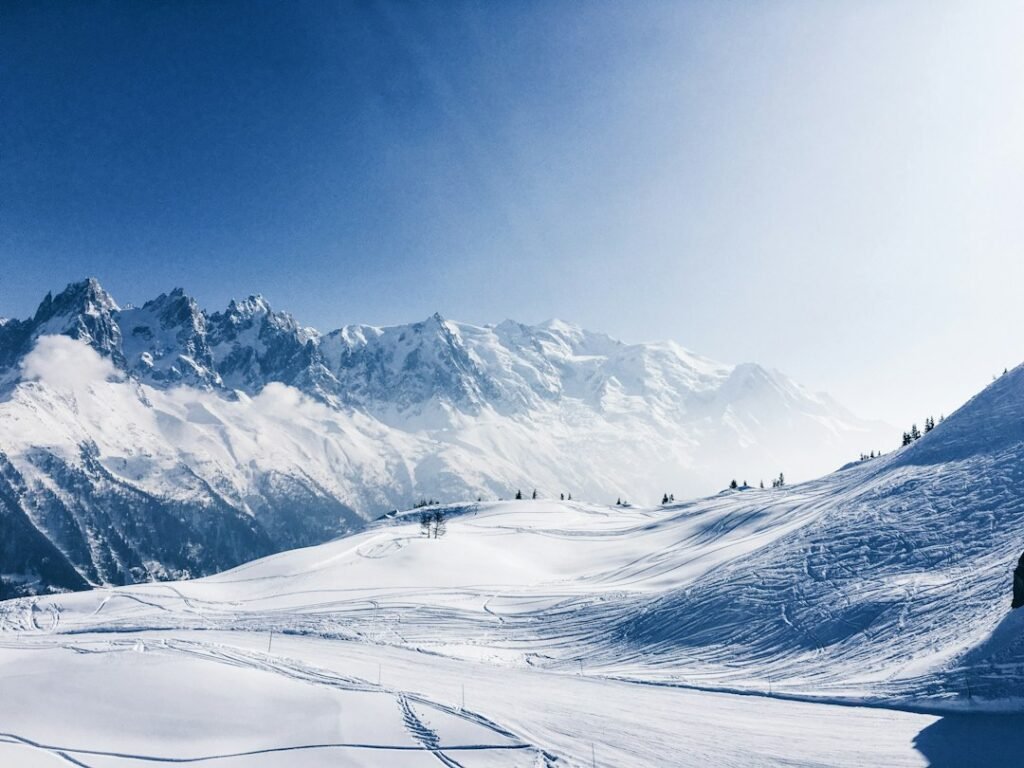
Is Val Thorens the right ski resort for you?
Val Thorens has a big advantage when you’re planning a ski trip outside the deepest part of winter: the resort itself sits at around 2,300 metres. That’s high by Alpine village standards and means you’re already close to the mountain. It isn’t a promise of perfect weather, but it is a genuine reason many skiers shortlist Val Thorens for early or spring holidays. Just be careful not to confuse its own skiing with the much larger 3 Vallées linked area.
How big is the ski area?
The official resort distinguishes its local Val Thorens–Orelle area from the much larger linked 3 Vallées. The resort markets about 150 kilometres for Val Thorens–Orelle and around 600 kilometres across the wider 3 Vallées network. Those are different purchases and experiences. Someone learning to ski doesn’t need to pay for a domain they cannot realistically use, while confident intermediates may enjoy covering several valleys. Before booking, compare the actual ski-pass products, current lift links and the location of your accommodation.
Is Val Thorens snow-sure?
No ski resort can guarantee snow quality on every slope every day. What Val Thorens offers is a very high village base and extensive high-elevation terrain. That’s especially useful when comparing opening and closing periods, though the exposed location can bring wind or harsh weather and temporary lift closures. The official 2026–27 operating calendar currently lists a Val Thorens–Orelle season from 21 November 2026 to 2 May 2027, with the wider 3 Vallées domain following a shorter schedule. Always verify these dates and available pistes again before paying for a trip.
Is it easy to stay beside the lifts?
One of Val Thorens’ distinctive features is that many places to stay are very close to skiing, often with convenient slope access. That doesn’t mean every accommodation building, entrance and connecting piste is the same. Beginners should check whether they can comfortably reach their meeting point without crossing terrain beyond their ability. Families may find the convenience worth paying for, particularly on a short week with several lessons. As ever, a place advertised as ski-in/ski-out needs checking against the resort’s actual piste map.
Val Thorens and the wider Three Valleys
Val Thorens is the high-altitude village base in the Three Valleys network, but the local Val Thorens/Orelle pass and the full Three Valleys pass aren’t necessarily interchangeable. A beginner spending most of the holiday on local learning runs doesn’t automatically benefit from paying for the whole interconnected area. An experienced skier who wants to reach Méribel and Courchevel, meanwhile, needs to plan around the wider lift network and the time needed to return. Use the official Val Thorens visitor information as a reference for the current local setup.
What is Val Thorens like for beginners?
It’s possible to learn at Val Thorens, and the resort provides dedicated beginner facilities, but I would plan the first couple of days carefully. The altitude means colder, more exposed conditions at times than a sheltered lower valley, and a first-time skier should arrive with appropriate clothing and realistic expectations. Beginners don’t need the grand tour of the 3 Vallées on day one. The resort’s first-day guide is a useful source for its learning areas and practical arrangements.
Getting to the resort
Val Thorens sits high in the Belleville Valley, accessed by road through the mountains from transport hubs such as Moûtiers. That final climb needs factoring into your journey, especially with a late arrival or heavy snowfall. If you’re arriving by air, compare transfers for your actual flights, not a generic summer driving estimate. Public transport and private transfers differ considerably in convenience, particularly when several travellers carry ski bags. As a rule, I’d rather budget properly for an easy arrival than spend the first evening worrying about the last connection.
Where to stay without making mornings difficult
Before booking a hotel, look at the actual route from its front door to the lift or lesson meeting point. A property described as being in the resort may still require a lengthy walk, bus journey or steep return in ski boots. This matters even more if your group includes children or anyone hiring equipment for the first time. A room that costs a little more but puts you beside the right lift can repay the difference in time and hassle. Ski-in and ski-out is only useful if the connecting slope is within everyone’s ability. Check the accommodation address on a map, then cross-reference the operator’s lift and village plans.
How much will the holiday cost?
Don’t compare resorts on hotel prices alone. Put flights, transfers, accommodation, lift passes, equipment hire, lessons, mountain lunches and local charges into the same calculation. You may find a more expensive-looking hotel actually works out better once transport and board are considered. A full-area pass is not always necessary for beginners, whereas confident skiers may get real value from expanded terrain. Costs change by date and availability, so the provisional budget estimates in SlopeFinder’s map should never be mistaken for live bookable prices. Our ski holiday package guide explains the complete comparison.
Planning lessons and family skiing
If children or complete beginners are travelling, check the ski school’s age limits, language, group meeting points and required lift pass before you book. Some of the most awkward ski holidays start with a family discovering that their lessons are in a different sector from their hotel. Strong skiers can often reach farther-away terrain without much trouble, but beginners need an easy start and a manageable journey home. Don’t expect everyone to ski together every hour. Sometimes the happiest arrangement is to split up for a lesson or two and meet somewhere convenient for lunch.
When to go and what snow reports really mean
A resort’s altitude and winter reputation help with planning, but neither guarantees perfect skiing. Wind can close lifts at high altitude, warm weather can affect lower slopes, and the conditions at a summit camera can look very different from those near the village. December and spring holidays call for extra care with operating calendars and accessible terrain. Midwinter can bring cold temperatures and crowded school-holiday weeks. Check current piste maps, webcams and official operating reports when deciding, then treat forecasts as forecasts. For a broader seasonal comparison, see when to go skiing in Europe.
Getting there from the UK
Look at the full journey, not just flight duration. Different departure airports, arrival times and mountain transfers can completely change how convenient a resort feels. A Friday evening flight might work beautifully for a long weekend, or leave you stranded with a limited transfer timetable. Families should consider late arrivals, baggage and the last walk from the drop-off point. If you’re travelling with your own skis, confirm carriage rules in advance. The UK airport travel guide helps compare these moving parts, although seasonal routes must be checked with airlines for the actual dates.
How to decide whether it’s the right fit
I would shortlist this destination alongside at least two alternatives that offer a different balance of terrain, price and village atmosphere. Ask each person what matters most: learning, mileage, a quieter holiday, nightlife or a convenient family base. If one element matters to everyone, make it the priority. Spend less time chasing an abstract ‘best resort’ ranking and more time checking the lift you’ll actually use each morning. After comparing, open the SlopeFinder map, save the resorts and review the differences before looking at genuine travel offers.
Frequently asked questions about Val Thorens
What altitude is Val Thorens?
The resort village is around 2,300 metres above sea level, according to the official tourism office.
Is Val Thorens part of the 3 Vallées?
Yes. The Val Thorens–Orelle ski area links into the larger 3 Vallées domain, subject to lift operations and pass validity.
Is Val Thorens good for beginners?
It has learning facilities, but confirm suitable lesson areas, pass requirements and the conditions at its exposed high altitude.
Can you ski in Val Thorens in April?
Its planned 2026–27 ski season runs into early May, but actual lift operation depends on weather and operational conditions.
For comparisons across more destinations, browse the Ski Holidays hub, the Ski Resort Directory and interactive map.
Explore resorts on SlopeFinder
Save your favourite resorts and compare the destinations that suit your dates and travel plans.
Explore the interactive resort mapBefore booking, confirm live availability, lift operations, transfers and what the final price includes.